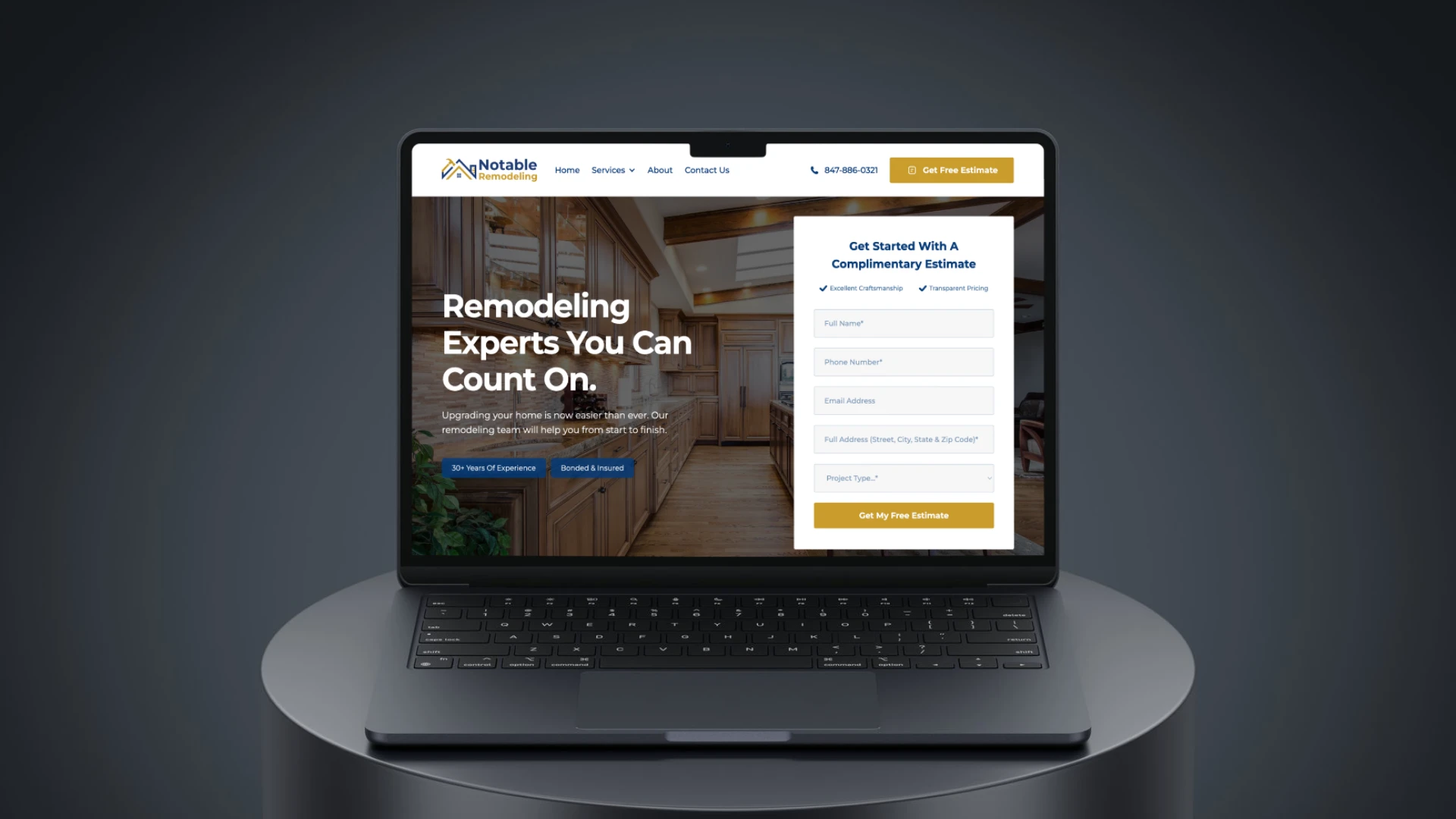




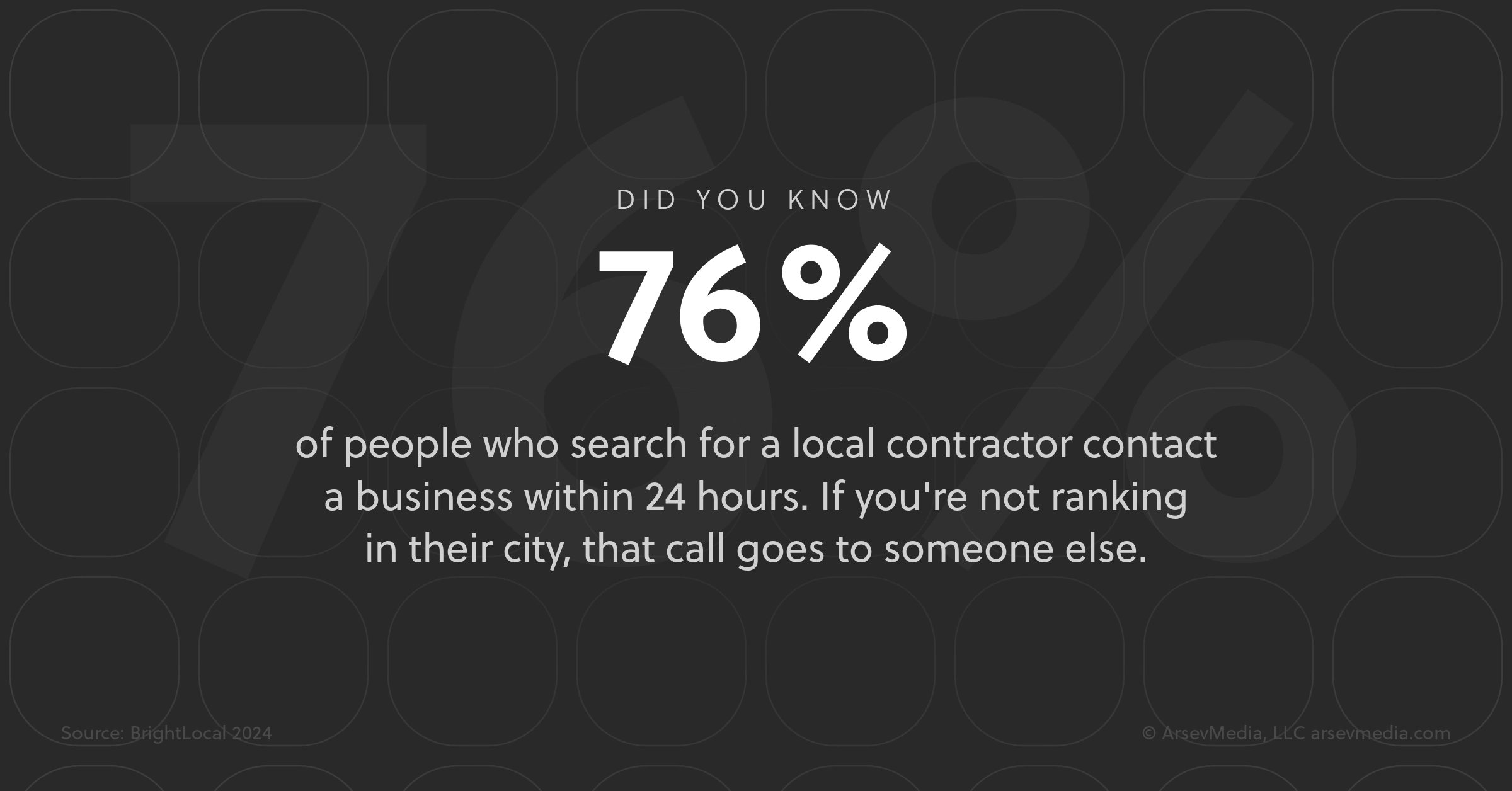
If you’re a contractor relying on local leads, whether roofing, siding, HVAC, plumbing, cleaning, or insurance, local SEO is no longer optional.
When homeowners search for services near them, Google decides who shows up first, who gets the calls, and who gets ignored.
This checklist outlines what actually matters for local rankings in 2025, based on real-world results and current search behavior.
1. Optimize Your Google Business Profile
Your Google Business Profile is often the first interaction potential customers have with your business, even before they visit your website.
Make sure your profile includes an accurate business name with no keyword stuffing, correct primary and secondary categories, a complete list of services, clearly defined service areas, updated business hours, and high-quality photos of your team, trucks, job sites, and office.
This matters because Google’s AI now pulls heavily from your profile to describe your business in search results. Incomplete or outdated profiles directly reduce visibility and trust.
Also, your Google Business Profile's business name, address and phone number (NAP) should match accross the web to improve local signals.
Pro Tip: Also, ensure that you're collecticing reviews from your clients as this is one of the biggest ranking factors for local SEO!
2. Ensure NAP Consistency Everywhere
NAP stands for Name, Address, and Phone Number. This information must be identical across your website, Google Business Profile, Yelp, BBB, Facebook, Angie's List, Apple Maps, and any industry directories.
Even small differences such as Suite vs Ste or formatting changes can negatively impact rankings.
Google uses citations to verify legitimacy. Inconsistent data weakens trust signals and can hold back local visibility.
3. Build Location-Specific Service Pages
If you serve multiple cities, one generic service page will not rank well.
You should have individual service pages for each core service, as well as localized service pages for each city or service area you target. Each page should contain unique content and not be copied from other locations.
For example, a roofing company in Illinois might have pages for roofing services in Chicago, Naperville, and Schaumburg.
Google ranks pages, not businesses. Localized service pages allow you to rank in multiple cities at the same time and capture more local searches.
4. Optimize On-Page SEO With Proper Depth
Every important page on your website should include a title tag, a clear and optimized H1 heading, supporting subheadings, internal links to related services and locations, and a clear call to action above the fold.
Link depth is also important. Your most important pages should not be buried several clicks deep in your website structure.
From a content perspective, pages should ideally contain at least one thousand words when possible. Thin or low-HTML pages often struggle to rank competitively and can limit your ability to appear near the top of search results.
Google favors pages that demonstrate depth, relevance, and authority.
5. Collect and Manage Google Reviews Strategically
Reviews influence both rankings and conversions.
You should ask for reviews consistently and respond to both positive and negative reviews in a timely and professional manner.
Address concerns calmly, thank customers for their feedback, and never ignore criticism.
One common issue we see is contractors responding only to positive reviews while leaving negative reviews unanswered. This is not a good look.
Potential customers may read review responses closely and thoughtful replies build trust even when feedback is not perfect.
6. Improve Website Speed and Mobile Experience
Most home service and contractor searches happen on mobile devices, so performance matters.
Your website should load in under three seconds, be fully mobile-optimized, have clickable phone numbers, and display calls to action without excessive scrolling.
Images play a major role in speed. Images should ideally be under one hundred kilobytes and use the WebP file format when possible.
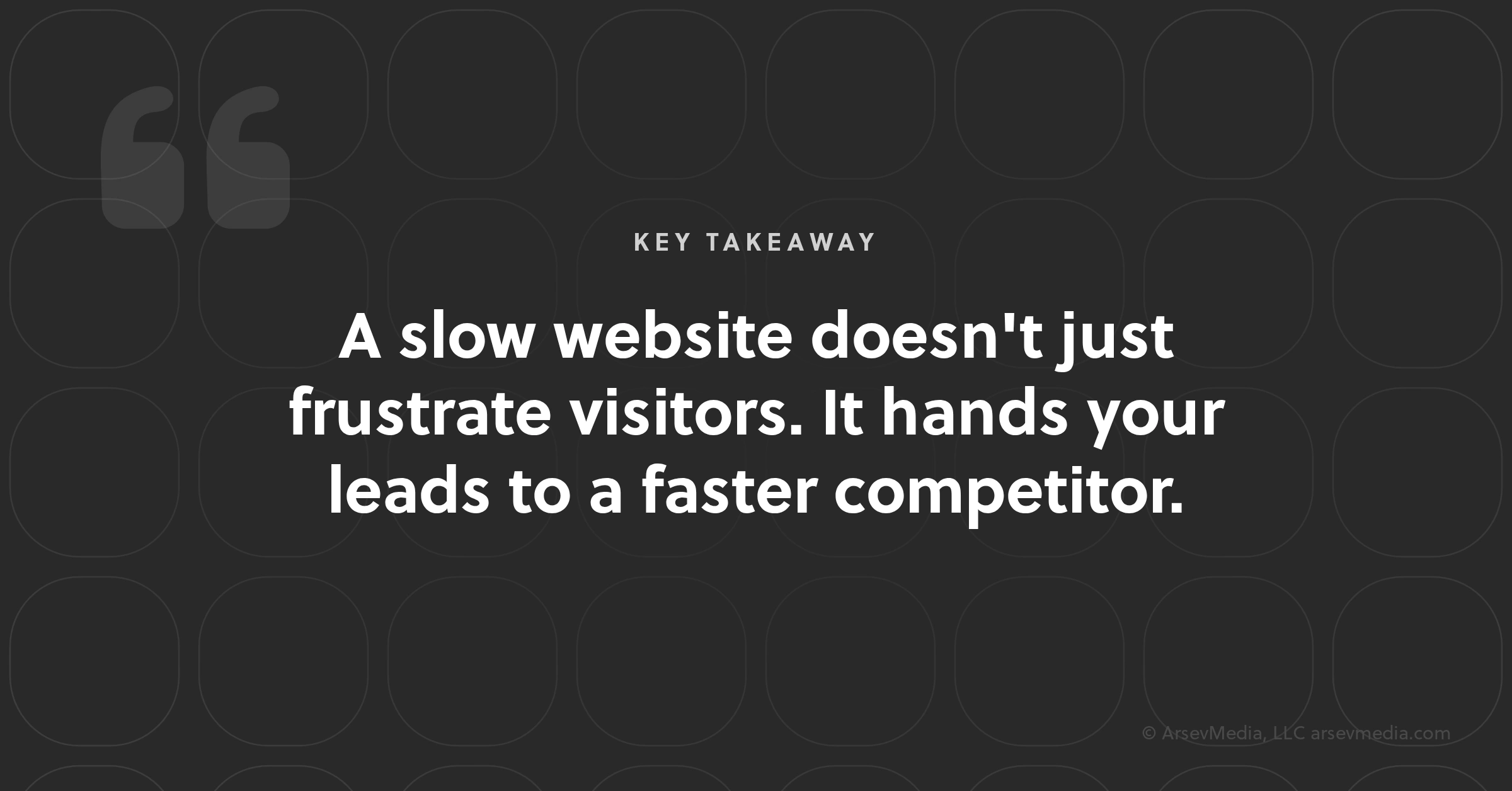
Slow home service business websites lose rankings and leads. Page speed impacts both SEO and conversions.
It's all about improving user experience and page speed is a significant factor.
Pro Tip: Reducing the file size of your images can significantly increase site speed. Use a tool like PageSpeed Insights to check your site’s performance and identify what’s slowing it down.

7. Use Proper Website Structure and Pages
A clean site structure helps users and search engines navigate your website effectively.
Your site should include:
- Homepage
- Individual service pages
- Localized service pages
- FAQ page
- About page
- Reviews or testimonials page
- Blog or resources page
- Contact page
An FAQ page is especially valuable for SEO because it helps capture long-tail searches and common customer questions.
You should also ensure your XML sitemap is submitted to Google Search Console, there are no broken links, and internal links connect services, locations, and FAQs logically.
8. Publish Local SEO Content Consistently
Blog content supports your service and location pages by building relevance and authority.
Effective content includes local project spotlights, service explainers, frequently asked questions, and city-specific insights.
Aim to publish at least 4 blogs per month with 1,000 words each. The blogs should be well researched and written by a human.
AI tools can assist with research or structure for blogs, but fully AI-generated content often lacks depth, originality and doesn't follow E-E-A-T.
Content creation is time-consuming, and hiring a SEO professional that is knowledgeable about your industry can help ensure writing consistency and quality.
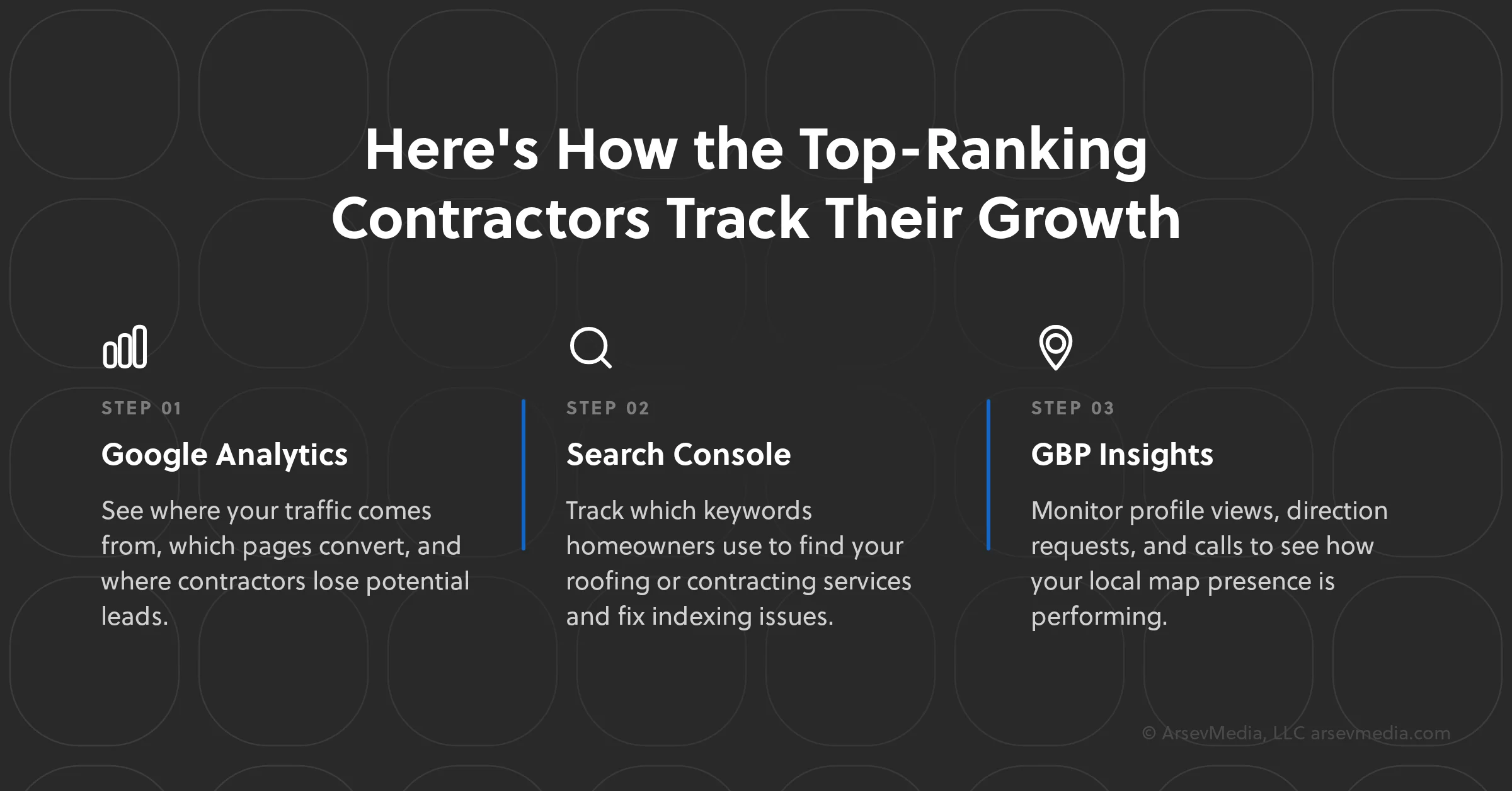
9. Track Performance Properly
At a minimum, you should have Google Analytics, Google Search Console, and Google Business Profile Insights setup.
Call and form tracking is optional but highly effective for service-based businesses if you want more accurate lead attribution.
Tracking leads shows what is working, what is not and where opportunities exist!
10. Avoid Common Local SEO Mistakes
Avoid keyword stuffing your business names or content, fake or purchased reviews, duplicate or thin location pages, spam backlinks, and a set-it-and-forget-it SEO approach.
SEO shortcuts almost always lead to long-term problems.
Google is also always releasing updates, so you don't want to get penalized for bad practices.
Final Thoughts
Local SEO is not about tricks. It is about structure, consistency, depth, and trust.
Contractors who treat their website and Google presence as real marketing assets consistently outperform competitors who do not.
If you are unsure whether your site is helping or hurting your rankings, the fastest way to find out is with a professional audit.
Want to Know Where You Stand?
We offer a free website and local SEO audit that identifies ranking blockers, missed local opportunities, content and structure gaps, conversion issues, and clear next steps.
Schedule your free audit today.
Need Help With Contractor Marketing?
We specialize in helping home service businesses upgrade their websites, SEO, and lead generation.
.svg)