



If you are a contractor running paid ads, you have likely asked this question before. Should you use Google Ads or Local Service Ads?
Both appear at the very top of Google search results. Both can generate leads. But they work very differently and serve different purposes.
Choosing the right platform can save money, improve lead quality, and help your contracting business grow faster.
This guide explains the difference between Google Ads and Local Service Ads for contractors and home service businesses.
What Are Google Ads
Google Ads are pay-per-click (PPC) ads that appear in Google search results.
Contractors bid on keywords such as roofer near me, roofing company near me, HVAC repair, or emergency plumber. You only pay when someone clicks your ad.
Google Ads give you full control. You decide the keywords, ad copy, landing pages, targeting, and daily budget.
This flexibility makes Google Ads powerful, but it also means campaigns must be set up and managed correctly.
Google Ads are best for contractors who want scalability, control, and long-term growth in fields like paving, roofing, or HVAC.
What Are Local Service Ads
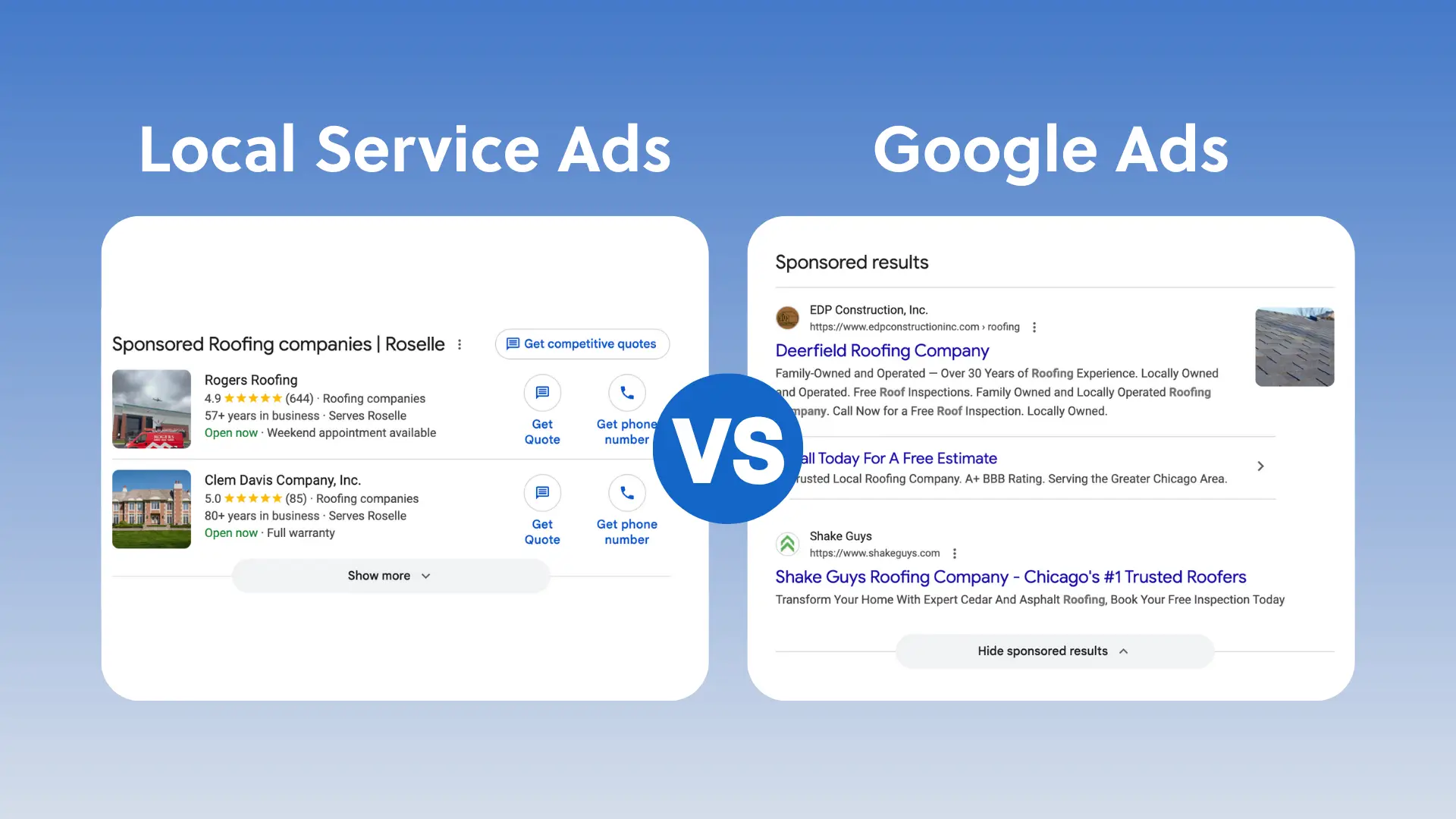
Local Service Ads appear above Google Ads and organic results, but this is subject to change since Google does shift SERP layouts often.
These ads include the Google Guaranteed or Google Screened badge, which helps build trust with homeowners. Users can call you directly or submit a Google lead form without ever visiting your website.
With Local Service Ads, you pay per lead instead of per click.
Local Service Ads are more beginner-friendly. Google handles most of the heavy lifting, including ad placement, targeting, and lead delivery.
To perform well, you must also have a strong Google Business Profile. Your review rating, responsiveness, and profile completeness directly influence your visibility in Local Service Ads.
Google Ads vs Local Service Ads Key Differences
The biggest difference between the two platforms is control versus simplicity.
- Google Ads give contractors full control over targeting, messaging, and landing pages. Local Service Ads are easier to manage but more limited.
- Google Ads charge per click. Local Service Ads charge per lead.
- Google Ads drive traffic to your website. Local Service Ads keep homeowners inside Google.
Both platforms can work well when used correctly.
Lead Quality Comparison
Local Service Ads often generate high-intent leads. Homeowners searching through LSAs are usually ready to contact a contractor immediately.
However, lead quality can vary. Some leads may be outside your service area or unrelated to your services.
Google Ads (search) lead quality also varies and proper management is the key determining factor in lead quality. Strong landing pages, negative keyword filtering, keyword targeting, and messaging help pre-qualify prospects before they contact you.
Local Service Ads work well for phone-driven businesses. Google Ads work well for contractors who want more control over lead quality and messaging.
Cost and Budget Control
Local Service Ads often start with a lower cost per lead.
The downside is limited control. You cannot fully manage keywords, bidding strategies, or ad copy.
Google Ads can become expensive quickly if mismanaged. When optimized correctly, they provide better long-term budget control.
Negative keywords, geo-targeting, conversion tracking, and proper landing pages help reduce wasted spend.
Smaller contractors often start with Local Service Ads. Growing companies typically benefit more from Google Ads.
Scalability and Growth Potential
Local Service Ads have limited scalability.
You are restricted by service categories, geographic availability, and Google’s lead volume.
Google Ads are highly scalable.
You can expand into new cities, promote new services, increase budgets during peak seasons, and test different campaigns and offers.
For contractors focused on growth, Google Ads offer significantly more flexibility.
Website and Brand Impact
Local Service Ads do not build your website or brand authority.
Users stay off your website and either call you directly or submit the Google lead form.
Google Ads drive traffic to your website. This helps build brand recognition, trust, remarketing audiences, and long-term SEO value.
If your website is treated as a long-term marketing asset, Google Ads play a much bigger role.
Which Platform Is Better for Contractors
The best platform depends on your goals and ad management experience level.
For roofing companies and home service business owners that don't have experience running ads, Local Service Ads are much easier to launch as a beginner.
Once your business is verified and your background check is approved, you can begin receiving leads quickly.
Google Ads are typically more difficult to manage. They require a solid understanding of keyword strategy, bidding, landing pages, and conversion tracking.
If Google Ads are not optimized correctly, it is easy to burn through budget fast.
Because of this, many contractors choose to work with a PPC agency, hire an in-house marketer, or assign Google Ads management to an experienced marketing professional.
Many successful contractors use both platforms together. Local Service Ads capture high-intent calls, while Google Ads support growth, branding, and website conversions.
Common Advertising Mistakes Contractors Make
Some contractors rely only on Local Service Ads and struggle to scale.
We combine both Google Search Ads and Local Service Ads for our clients, so they get the best of both worlds.
Another common mistake is choosing a platform without understanding how it fits into the overall marketing strategy.
Paid advertising works best when aligned with your website, SEO, and conversion process.
Lastly, many contractors try to run Google Ads on their own, and if you don’t really know what you’re doing, you can burn through your budget very quickly. Paid ads aren’t something you want to learn by trial and error.
It’s always a good idea to discover paid media experts through reputable marketing platforms or industry directories, review their track record, and check real client feedback. And of course, if you’re a service-based business, ArsevMedia also offers professional pay-per-click management to handle it the right way.
Final Thoughts
Google Ads and Local Service Ads are tools, not competitors.
Each platform has strengths. Each has limitations.
The right choice depends on your business, service area, budget, and growth goals.
When set up correctly, both can generate strong results. When set up incorrectly, both can waste budget quickly.
Need Help With Contractor Marketing?
We specialize in helping home service businesses upgrade their websites, SEO, and lead generation.
.svg)